
A doji forms when the open and close are almost the same — a very thin body. It means the period ended in a draw.
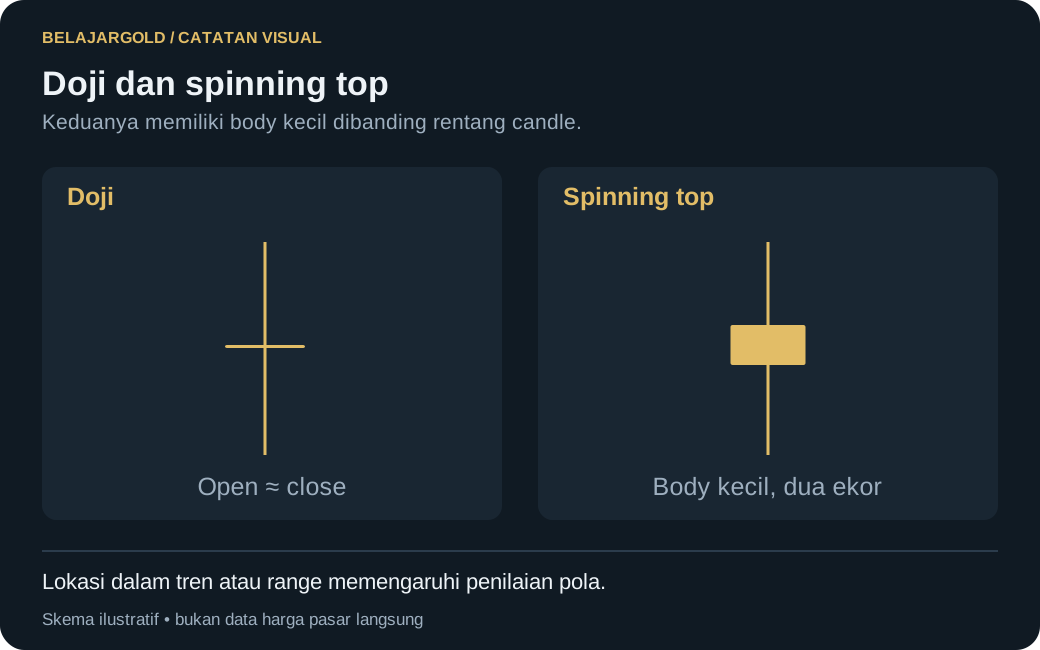
- Standard doji — balanced upper and lower wicks. Pure indecision.
- Dragonfly doji — a long lower wick, almost no upper wick. Price was rejected from below.
- Gravestone doji — a long upper wick. Price was rejected from above.
- Spinning top — similar to a doji, but with a small body rather than a very thin one.
Context decides
A doji in the middle of a range = normal, often ignored. A doji right at strong support/resistance after a long trend = a signal of a potential shift in strength that is worth watching.
Key points
- Doji = a pause/indecision, not an automatic reversal.
- A doji's value rises dramatically when it appears at an important level.
Save your learning progress
Sign up free to mark lessons as completed and unlock all member lessons.
Sign Up Free
Risk disclaimer: all content on this site is provided for educational purposes and is not financial advice, signals, an invitation to trade, or a promise of profit. Trading carries a high risk and may result in the loss of part or all of your capital. Check the legality of service providers in your jurisdiction.